

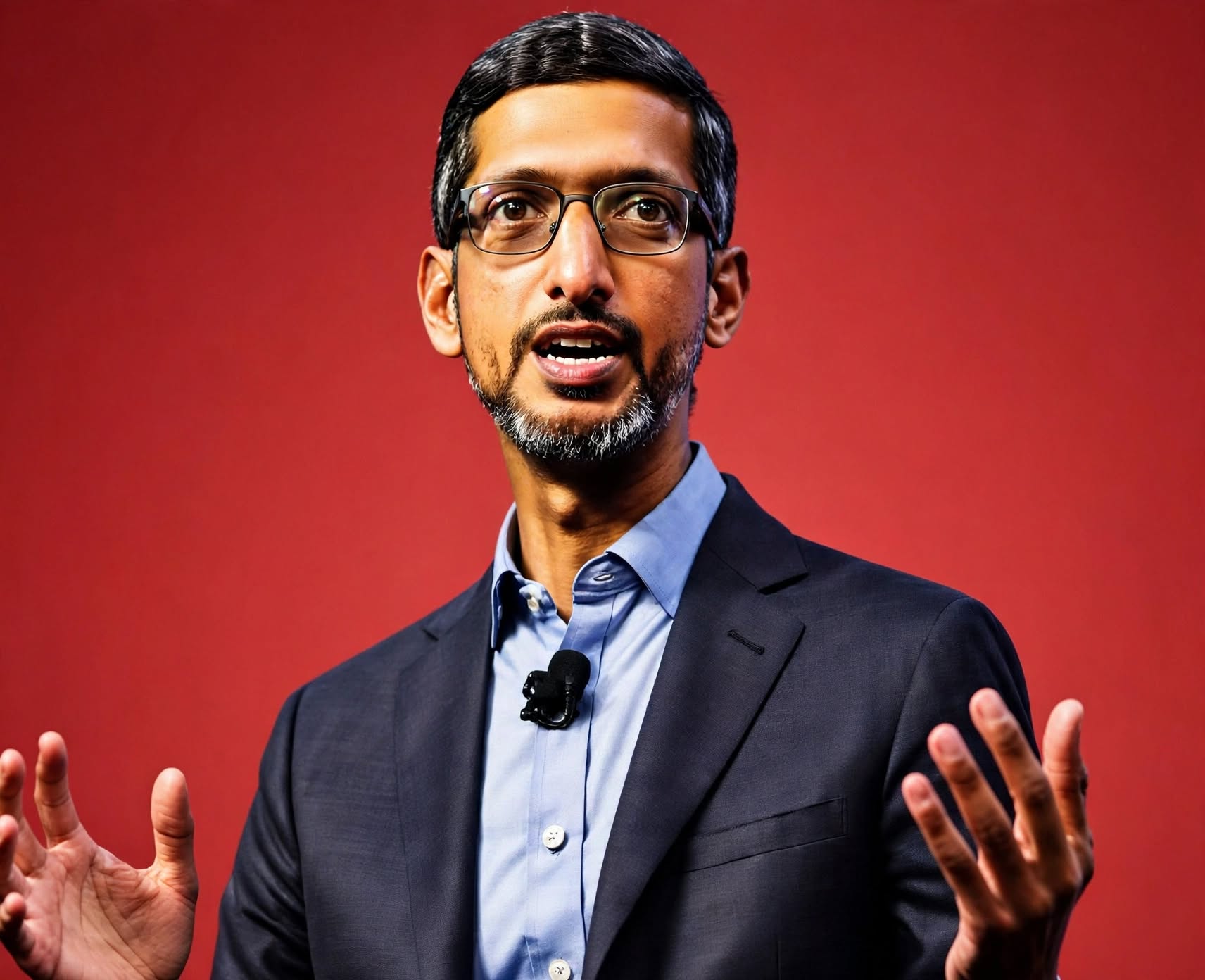
Sundar Pichai and Carl Icahn are prominent figures in American business, but there is no reliable evidence that they have had a direct business partnership, worked together personally, or jointly managed an investment or company.
The strongest documented connection between Sundar Pichai and Carl Icahn is indirect and dates to Google’s 2011 agreement to acquire Motorola Mobility.
At the time, Icahn and affiliated entities were major Motorola Mobility shareholders. He was pressing Motorola to examine strategic alternatives for its valuable patent portfolio. Google, meanwhile, was separately discussing Motorola’s patents, the Android ecosystem and a possible acquisition of the entire company.
Pichai already worked at Google, but he was not Google’s CEO and is not named among the executives who conducted the Motorola acquisition negotiations in Motorola Mobility’s detailed SEC merger record. Larry Page was Google’s CEO when the deal was announced.
Sundar Pichai and Carl Icahn at a glance
| Sundar Pichai | Carl Icahn | |
|---|---|---|
| Best known for | Leading Google and Alphabet | Activist investing |
| Current documented role | CEO of Alphabet and Google | Chairman of Icahn Enterprises |
| Connection to Motorola Mobility in 2011 | Senior Google executive, but not identified in the SEC record as a Motorola acquisition negotiator | Major Motorola Mobility shareholder advocating action involving its patent portfolio |
| Side of the transaction | Motorola Mobility shareholder | |
| Direct partnership between the two | No documented partnership found | No documented partnership found |
Alphabet’s April 2026 proxy statement identifies Pichai as its Chief Executive Officer. Icahn Enterprises currently identifies Carl C. Icahn as Chairman of its board.
Who is Sundar Pichai?
Sundar Pichai joined Google in 2004 and eventually became one of the company’s most influential product executives. Alphabet’s corporate filings say he became CEO of Google in October 2015 and CEO of Alphabet in December 2019. His responsibilities over the course of his Google career have included major products and platforms such as Chrome, Android, Search, Maps, Gmail and Google Workspace.
That timeline is important in understanding his relationship—or lack of a direct one—with Icahn during the Motorola transaction.
Google announced its agreement to acquire Motorola Mobility on August 15, 2011. Pichai had not yet become CEO of Google. Larry Page was the chief executive and personally commented on the acquisition in Google’s announcement.
In other words, Pichai’s present-day position should not be projected backward onto Google’s management structure in 2011.
Who is Carl Icahn?
Carl Icahn is an investor particularly associated with shareholder activism: acquiring substantial interests in companies and using shareholder influence to press for strategic, financial or governance changes.
Icahn Enterprises currently lists him as Chairman of the Board and describes his investment-management activities through Icahn Capital and related entities.
His involvement with Motorola Mobility provides a well-documented example of that investing approach.
Motorola’s merger materials show that Icahn and related entities were among the company’s largest shareholders before the Google acquisition. In the definitive merger proxy, the Icahn group was listed as beneficially owning 33,505,706 Motorola Mobility shares, or 11.39% of the company.
The main connection: Google’s Motorola Mobility acquisition
The clearest historical link between the two names begins with Motorola Mobility’s patents.
Google and Motorola were already discussing patents
Motorola Mobility’s SEC merger history provides an unusually detailed chronology of the negotiations.
According to the filing, Google’s Android chief Andy Rubin contacted Motorola Mobility CEO Sanjay Jha in early July 2011 following the auction of Nortel Networks’ patent portfolio.
During meetings in early and mid-July, Motorola and Google executives discussed:
- the Nortel patent sale;
- intellectual-property litigation;
- protecting the Android ecosystem;
- Motorola Mobility’s patent portfolio;
- Motorola’s mobile-device and home businesses; and
- possible strategic options, including a sale of Motorola Mobility to Google.
The Google executives named in this part of Motorola’s official account include Larry Page, Nikesh Arora, Andy Rubin and Kent Walker. Pichai is not named in that negotiation chronology.
This timing matters because it establishes that Google’s acquisition discussions were underway before Icahn’s documented intervention later in July.
Carl Icahn pushed Motorola to examine its patent options
Motorola’s SEC filing states that on July 20 and July 21, 2011, Carl Icahn and Daniel Ninivaggi contacted Motorola CEO Sanjay Jha.
Icahn and his affiliates were then beneficial owners of approximately 11% of Motorola Mobility’s outstanding shares. They expressed the view that the company should explore alternatives involving its patent portfolio.
The evidence therefore supports a precise conclusion: Icahn was pressuring Motorola to consider ways of maximizing the value of its patents, but he did not initiate Google’s interest in Motorola.
Google and Motorola had already been discussing patents and a potential sale.
That distinction is useful because simplified accounts of the acquisition can otherwise create the impression that Icahn directly caused Google to buy Motorola. The public transaction record does not support such a broad claim.
How Google’s Motorola offer developed
Google’s pursuit of Motorola accelerated rapidly during the summer of 2011.
The detailed merger record shows negotiations over price and transaction terms, ultimately producing a definitive merger agreement dated August 15, 2011.
Google and Motorola announced that Google would acquire the company for $40 per share in cash, giving the transaction a total value of about $12.5 billion.
That price represented a 63% premium to Motorola Mobility’s closing share price on August 12, 2011. Both companies’ boards unanimously approved the transaction.
Read the original Google-Motorola acquisition announcement filed with the SEC
Icahn’s involvement continued as the deal approached completion
Icahn’s involvement did not end with his calls for Motorola to consider its patents.
Supplementary Motorola SEC disclosures show that representatives of Google and Icahn negotiated a possible voting agreement under which Icahn and his affiliates would support the proposed merger.
The voting agreement was ultimately not executed. Motorola’s board rejected a request connected with sharing a percentage of a possible reverse termination fee with the Icahn parties, and Google agreed to proceed without the Icahn voting agreement.
This provides a more specific picture of Icahn’s role: he was an influential Motorola shareholder whose position mattered to the transaction, rather than a Google executive, adviser or acquisition partner.
Did Sundar Pichai negotiate the Motorola deal?
There is no dependable public evidence that Pichai was one of the principal negotiators.
That does not establish that he had no internal knowledge of the transaction. Large corporate transactions can involve conversations and internal work that never appear in regulatory filings.
But Motorola Mobility’s extensive SEC merger history identifies the Google executives directly participating in key negotiations and repeatedly names figures such as:
- Larry Page;
- Andy Rubin;
- Nikesh Arora;
- Kent Walker;
- David Drummond; and
- other legal and financial representatives.
Pichai is not identified in that history as a Motorola acquisition negotiator.
The evidence therefore does not justify describing the transaction as a collaboration between Sundar Pichai and Carl Icahn.
A more accurate description is that Pichai was a senior Google executive during a transaction in which Icahn was an important shareholder on Motorola’s side.
Why Motorola’s patent portfolio mattered to Google
The Motorola transaction occurred during a period of intense intellectual-property disputes in the smartphone industry.
Motorola’s SEC record specifically documents conversations about the Nortel patent auction, intellectual-property litigation, the Android ecosystem and Motorola’s own patent portfolio.
When Google completed the acquisition on May 22, 2012, Larry Page again emphasized Motorola’s role within Android.
Google’s announcement that the Motorola acquisition had closed
The importance of the patents became even clearer when Google later sold the Motorola handset business.
Google later sold Motorola to Lenovo—but retained most of the patents
On January 29, 2014, Google announced an agreement to sell Motorola Mobility to Lenovo for approximately $2.91 billion.
A superficial comparison of Google’s roughly $12.5 billion acquisition price with the later $2.91 billion Lenovo deal can be misleading because Google did not sell Lenovo exactly the same collection of assets it had originally acquired.
Google explicitly said it would retain the vast majority of Motorola’s patents. Lenovo received Motorola’s handset business, brand and other intellectual property rights, while Google kept most of the broader patent portfolio.
The Lenovo acquisition closed on October 30, 2014. Lenovo’s announcement confirmed that Google retained ownership of the majority of the Motorola Mobility patent portfolio.
Read Google’s announcement of the Lenovo transaction
This later transaction helps explain why patents were so central both to Google’s strategic reasoning and to Icahn’s earlier pressure on Motorola.
Is Carl Icahn a major Alphabet investor today?
The latest publicly filed Carl Icahn Form 13F available as of September 2026 covers holdings as of June 30, 2026 and was filed with the SEC on August 14, 2026. The filing reports 12 holdings with an aggregate reported value of approximately $8.26 billion.
Alphabet does not appear among the reported positions in that portfolio summary. The largest positions are associated with companies such as Icahn Enterprises, CVR Energy and CVR Partners.
This should be stated narrowly. A Form 13F is not a complete map of every financial exposure an investor can have. It covers specified reportable securities and does not, for example, provide a complete picture of short positions or every possible private investment.
Accordingly, the defensible conclusion is that Icahn’s June 30, 2026 public 13F does not show Alphabet as a reported long holding—not that he could not have any form of financial exposure to Alphabet whatsoever.
View Carl Icahn’s Q2 2026 Form 13F filing at the SEC
Two very different forms of corporate influence
The historical overlap between Pichai and Icahn is easier to understand when their roles are separated.
Pichai is primarily a corporate operator. He advanced through Google’s product organization, eventually becoming CEO of Google and later Alphabet.
Icahn built his influence primarily as an investor and shareholder activist. In the Motorola case, he exerted pressure from the shareholder side, advocating strategic consideration of the company’s patent assets.
Their respective positions in 2011 illustrate those different paths.
Icahn owned a substantial economic stake in Motorola Mobility and sought changes he believed could increase shareholder value. Google was evaluating Motorola as a strategic acquisition target. Pichai was already an important Google executive, but the documentary evidence does not place him at the center of the negotiations.
Did Carl Icahn work for Google or Alphabet?
No reliable corporate or regulatory record reviewed for this article identifies Carl Icahn as a Google or Alphabet executive, director or employee.
His involvement in the Motorola transaction came from his position as a Motorola Mobility shareholder.
Similarly, there is no evidence in the transaction record that Pichai worked for Icahn or Icahn Enterprises.
Did Sundar Pichai and Carl Icahn personally work together?
No reliable public record located for this article establishes a direct professional partnership between them.
They can legitimately appear in the same historical discussion because their careers intersect indirectly through Google’s acquisition of Motorola Mobility.
That is different from saying the two men jointly negotiated the deal or had an ongoing business relationship.
The bottom line
The most accurate explanation of Sundar Pichai and Carl Icahn is a historical, indirect connection rather than a direct partnership.
Carl Icahn and his affiliates were major shareholders of Motorola Mobility in 2011. Icahn urged Motorola to explore alternatives involving its valuable patent portfolio. At roughly the same time, Google was already discussing Motorola’s patents, the Android ecosystem and a possible acquisition.
Google ultimately agreed on August 15, 2011 to acquire Motorola Mobility for approximately $12.5 billion.
Sundar Pichai worked at Google during this period, but he was not Google’s CEO. Motorola’s detailed SEC merger history identifies Larry Page and several other Google executives in the negotiations but does not identify Pichai as one of the acquisition negotiators.
The documentary record therefore supports an indirect connection through Google, Motorola Mobility and the strategic value of Motorola’s patents—not a documented Pichai-Icahn partnership.
Read also: Peter Buchignani: Career, Princeton Football and Family Life
