

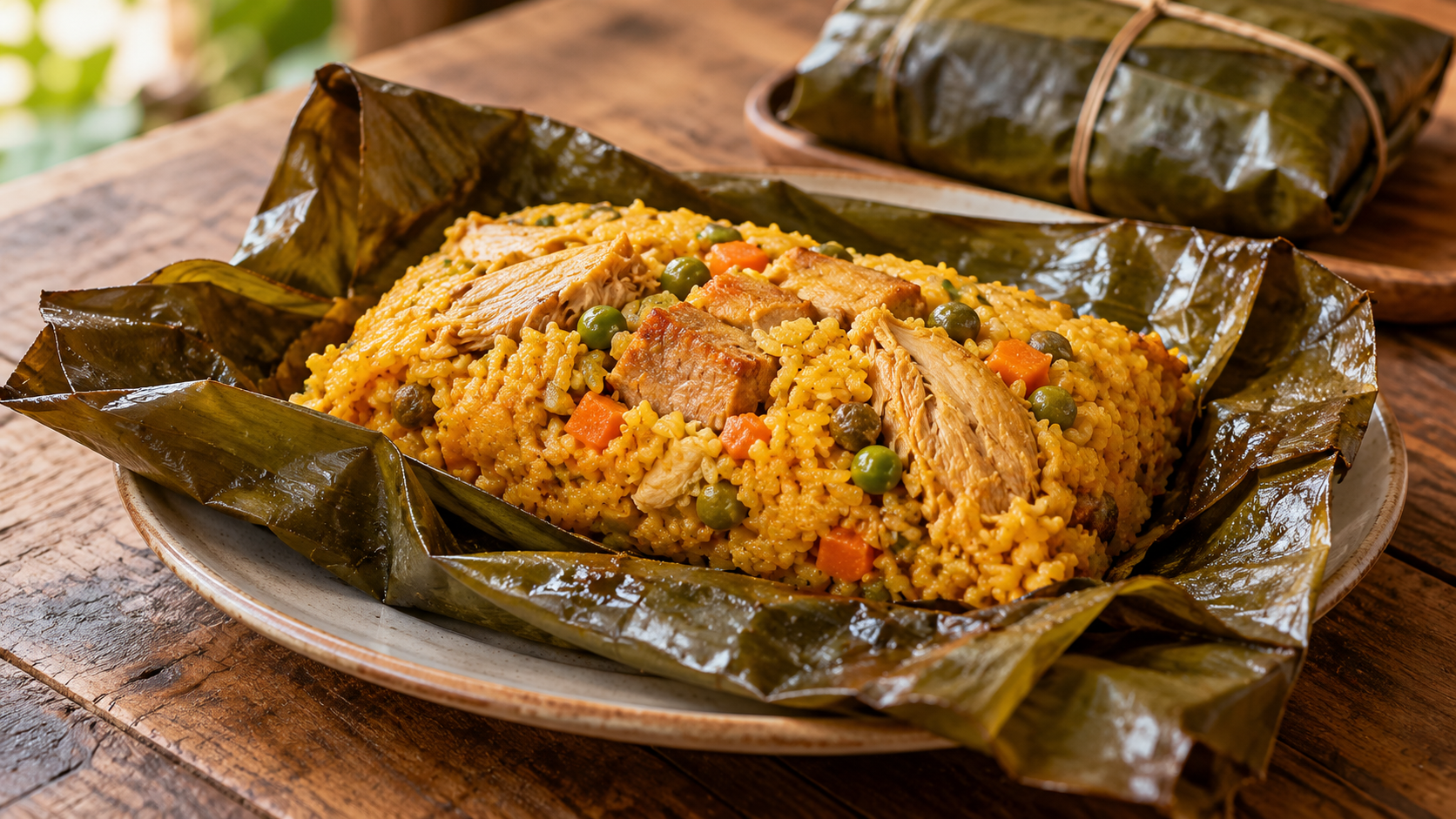
Finding the best tamal costeño near me starts with one important question: Are you looking for Colombia’s Caribbean-style pastel or a Mexican coastal tamal? Both names appear in food searches, but they can lead to different meals. For the Colombian rice-based version, try searching “pastel costeño” or “pastel de arroz colombiano” alongside your city or ZIP code. For a Mexican preparation, add the regional style or filling you want. Then check the restaurant’s own menu and confirm availability before heading out. The best choice begins with finding the dish you actually have in mind.
What Is a Tamal Costeño?
“Tamal costeño” does not describe one universal recipe. Its meaning depends on the country, region, and cook.
Colombia’s Caribbean-style pastel
In Colombia, tamal costeño is associated with the Caribbean coast and is also called pastel costeño or pastel de arroz. Rice is a defining ingredient in many versions, although coastal preparations can also use corn masa.
Fillings may include pork, chicken, vegetables, potatoes, and capers. The parcel is cooked inside leaves, with bijao or banana leaves appearing in different preparations.
Colombian recipe writer Erica Dinho’s pastel de arroz, for example, combines rice with chicken, pork ribs, pork belly, potatoes, carrots, peas, and capers. Her recipe illustrates a particular family-style preparation rather than a checklist every restaurant must follow.
That distinction matters when ordering: a different filling or wrapper does not automatically make a tamal less traditional.
Mexican coastal tamales
In Mexico, the same name can refer to several coastal preparations. Larousse Cocina’s culinary dictionary describes versions from Oaxaca’s Isthmus of Tehuantepec and southern Veracruz.
The Oaxacan example includes corn masa and a salted-fish filling. The Veracruz preparation uses corn masa with chicken or shrimp and is wrapped in banana leaves.
A menu listing “tamal costeño” therefore needs more context. Ask which regional preparation the kitchen serves before assuming it will contain rice, pork, or any other specific ingredient.
Search by the Dish’s Other Names
A useful local search combines three things: the dish, its culinary tradition, and your location.
For a Colombian rice-based pastel, try:
- “Pastel costeño near me”
- “Pastel de arroz colombiano [city]”
- “Colombian Caribbean food [ZIP code]”
- “Tamales costeños colombianos [city]”
For a Mexican version, try “Mexican tamal costeño [city]” or add a regional term such as “Veracruz.”
When results are sparse, repeat the search without the accent: “tamal costeno.” Also try the plural, “tamales costeños.”
Keep “Colombian” in searches for pastel de arroz. Without that qualifier, the name can produce unrelated rice dishes and desserts.
Once you find a candidate, look for an actual dish description. A restaurant serving Colombian food may specialize in a different regional tamal, while a broad “Latin American” category tells you little about what is available.
Check These Details Before You Visit
An appealing photograph is a starting point. Before making a trip or placing an order, establish what the kitchen is selling and when you can get it.
Confirm the regional style and ingredients
Ask whether the tamal contains whole rice, corn masa, or a combination. Then confirm the meats, vegetables, and other fillings.
For a chicken option, ask whether the recipe also includes pork, pork fat, or meat-based stock. The name of the featured protein may not describe every ingredient.
A simple question works well:
“Do you serve Colombian pastel costeño made with rice, or a Mexican-style tamal costeño?”
Ask about the serving schedule
Check whether the dish is available during your planned visit, requires advance ordering, or belongs to a particular menu.
If you are ordering several, confirm the quantity and pickup time directly. An item appearing on a menu does not establish that enough portions are available for your group.
Establish what the order includes
Find out whether the price covers one tamal, multiple pieces, or a meal with sides. Ask about portion size, sauces, and whether the tamal arrives hot, refrigerated, or frozen.
For delivery, compare the final checkout total. Menu price alone does not capture delivery charges, service fees, or other additions.
How to Choose Between Local Options
There is no useful nationwide answer to “best” without a location and a preferred style. A practical comparison focuses on the food you want, the evidence available, and the order you will receive.
| What to compare | What to look for |
|---|---|
| Regional match | A description that identifies the Colombian or Mexican preparation |
| Dish-specific reviews | Comments about the tamal itself, rather than only the restaurant overall |
| Recent photographs | Images that show the filling and portion clearly |
| Ordering details | Clear availability, pickup arrangements, and preparation instructions |
| Value | The full cost compared with portion size and included sides |
Read reviews for specific observations: Was the rice tender? Was the masa moist? Did the filling match the description? Several detailed comments about the same dish are more useful than a general statement that everything was delicious.
Treat customer photographs as clues rather than guarantees. They can help you understand a serving, but they cannot establish flavor or confirm today’s availability.
Once you taste the dish, judge it against the style you ordered. For a rice-based pastel, consider whether the rice is pleasantly cooked and the filling is well distributed. For a masa-based version, consider texture, seasoning, and the balance between dough and filling.
Ordering for Pickup or Delivery
Before checking out, confirm that you selected the exact tamal you wanted. “Tamal colombiano,” “tamal tolimense,” and “pastel costeño” should not be treated as interchangeable menu names.
For a first order, consider buying a smaller quantity before committing to a party tray. That gives you a chance to assess the kitchen’s recipe and portion size.
If the tamales arrive chilled or frozen, request preparation and storage instructions from the seller. Reheating directions should match the product and its packaging.
Frequently Asked Questions
Is tamal costeño the same as pastel costeño?
In Colombian Caribbean cooking, the names can refer to the same preparation, particularly a rice-based pastel. However, tamal costeño also describes Mexican regional dishes, so the country and ingredients matter.
Does every Colombian restaurant serve it?
Do not assume so. Colombia has several regional tamal traditions, including tolimense, santandereano, and antioqueño preparations. Check the specific menu item and ask which style the kitchen makes.
Is tamal costeño spicy?
The name alone does not establish heat level. Recipes differ, and sauces may add more heat than the tamal itself. Ask about chiles in the filling and whether spicy sauces come separately.
Can tamal costeño be vegetarian?
A seller may offer a vegetarian adaptation, but confirm all ingredients. Removing visible meat does not establish whether the rice or masa contains animal fat or meat-based stock.
How much does tamal costeño cost in the United States?
There is no single price that applies across U.S. restaurants and sellers. Compare current local menus, serving sizes, included sides, and the final pickup or delivery total.
Find the Style First, Then Your Favorite
The most effective search starts with a precise order: Colombian rice-based pastel, Mexican coastal tamal, or another clearly described regional preparation. Add your city, check the seller’s menu, and confirm availability. Those steps give you a stronger starting point for finding a local favorite.
Sources
- Señal Colombia: Colombian tamales and regional variations — Supports the Colombian coastal naming, rice and masa variations, and regional distinctions.
- Radio Nacional de Colombia: Six ways to prepare Colombian tamales — Describes regional preparations and ingredients used in tamal costeño.
- My Colombian Recipes: Pasteles de Arroz — Provides Erica Dinho’s specific rice-based recipe and its ingredients.
- Larousse Cocina: Tamal costeño — Documents Mexican coastal preparations from Oaxaca and Veracruz.
Read also John Zimmer and Joseph Lau: Careers, Wealth and Connection
