

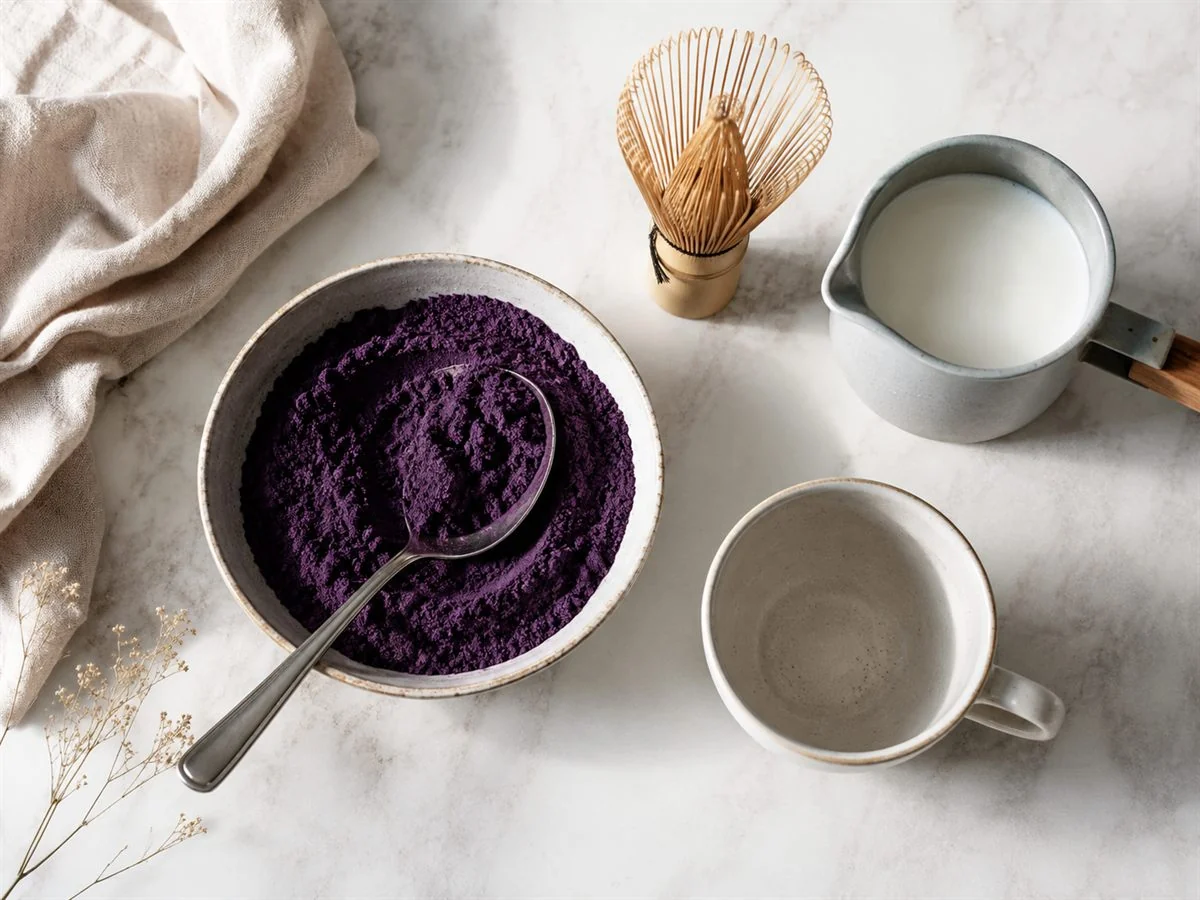
Ube powder is one of the easiest ways to bring the distinctive flavor and purple color of Filipino purple yam into everyday cooking. Whether you want to prepare a creamy latte, bake a colorful cake, or experiment with traditional desserts, this versatile ingredient offers plenty of possibilities. The secret lies in understanding how much powder to use, when to add liquid, and how cooking affects its texture.
Unlike fresh purple yam, which requires peeling, cooking, and mashing, powdered ube can be stored conveniently and measured directly into recipes. Some varieties need rehydration and cooking, while others are produced from precooked yam and can be incorporated into finished dishes. This difference matters more than many home cooks realize.
The appeal goes beyond appearance. Natural ube powder can contribute carbohydrates, small amounts of minerals, and plant pigments, although its nutritional content depends on processing. Its delicate, earthy sweetness pairs particularly well with coconut milk, vanilla, and dairy products. Think of it as a purple canvas that can take on both traditional Filipino flavors and modern recipes.
Authentic powder made from ube yam offers a convenient alternative to preparing fresh tubers, especially when they are difficult to find locally. With the right preparation method, it can be used in ube cakes, pancakes, smoothies, and creamy desserts without complicated equipment. A few practical adjustments to liquid quantities and cooking temperatures can make a noticeable difference to the final result.
Preparing ube powder before cooking
The first thing to check is whether your ube powder is raw or precooked. Products made from dehydrated raw purple yam may require thorough cooking, while instant varieties can sometimes be used after simple rehydration. Always check the manufacturer’s instructions because drying methods and starch content vary considerably between brands.
For a powder that requires cooking, begin by combining it with water or milk until the mixture becomes smooth. Using warm liquid can help disperse the particles, but gradually adding the liquid while stirring is often the best way to prevent lumps. Heat the mixture according to the package instructions until the starch is fully cooked and the texture becomes consistent.
A useful starting point for experimenting is approximately one tablespoon of ube powder to two or three tablespoons of liquid. This is not a universal preparation ratio. Some concentrated powders absorb much more moisture, and others require a considerably thinner mixture. Adjust gradually until you obtain the consistency required for your recipe.
If you are preparing an ube paste for baking, aim for a thick, spoonable mixture. For drinks, a thinner preparation usually blends more easily. Natural ube powder may produce a relatively subtle color, especially when combined with large quantities of milk or flour. Strongly colored commercial ube products sometimes contain added coloring or flavoring.
Another important distinction concerns ube powder and ube extract. Powder contains dehydrated yam solids, while extract is generally used in small quantities for flavor and sometimes color. They are not interchangeable in equal amounts because they behave differently during cooking. Using both can be appropriate in certain desserts, but the powder should remain the main ingredient when you want genuine yam texture.
How can you use ube powder in drinks?
Drinks are among the simplest ways to experiment with ube powder in cooking, particularly if you have purchased a precooked instant product. Its naturally mild flavor works well with creamy ingredients, and you can adjust sweetness without overwhelming the purple yam taste.
An ube latte is a popular option. Start with a small quantity of prepared ube paste or instant powder, using roughly one or two teaspoons for a standard cup as an initial experiment. Blend it with approximately 200 ml of warm milk, then add a little vanilla or sugar according to taste. Coconut milk produces a richer, more tropical character, while oat milk offers a dairy-free alternative.
For an iced version, allow the cooked ube mixture to cool completely before combining it with chilled milk and ice cubes. Mixing the powder directly into cold milk can leave small clumps, particularly when using varieties that require heating. Preparing a smooth base separately usually produces a better texture.
Smoothies offer another practical use. Combine prepared ube with banana, yogurt, and milk for a thick drink suitable for breakfast or a snack. Frozen mango can provide a pleasant contrast to the earthy flavor. If your powder is unsweetened, you can control how much sugar enters the recipe instead of relying on commercially prepared syrups.
Remember that ube is primarily a carbohydrate-containing ingredient, not a significant source of protein. Adding Greek yogurt, soy milk, or another protein-containing ingredient may help create a more nutritionally balanced drink. Portion size and additional sweeteners will influence the final calorie and sugar content.
Baking cakes, pancakes, and cookies with ube powder
Baking is where the versatility of ube powder for desserts becomes particularly useful. Its mild sweetness and natural purple color work well in sponge cakes, muffins, pancakes, and soft cookies. However, it does not behave exactly like wheat flour, so replacing large amounts of flour can affect structure and moisture.
When making an ube cake, prepare the powder according to the product instructions and incorporate the resulting paste into the wet ingredients. Eggs, milk, butter, and sugar can be mixed separately before combining everything with flour. This method helps distribute the ube evenly and reduces the risk of dry purple spots appearing in the finished cake.
For a standard homemade cake, starting with two or three tablespoons of powder can be reasonable, depending on its concentration and the amount of batter. Adjust the liquid to account for the moisture used during rehydration. Stronger color does not necessarily mean stronger flavor, particularly when natural powder is used without added extract.
Ube pancakes are equally straightforward. Add prepared ube to ordinary pancake batter, keeping the consistency pourable rather than excessively thick. Cook over moderate heat because prolonged exposure to high temperatures can darken the surface and reduce the visibility of the purple color.
Cookies require a slightly different approach. Too much additional liquid can cause spreading, while excessive powder may produce a dry texture. Start with a small amount, preferably using a recipe designed for ube, and observe how the dough responds. White chocolate, coconut, and vanilla are particularly suitable flavor combinations.
Natural purple yam pigments can change appearance during baking. The final shade depends on the powder, acidity of other ingredients, and cooking conditions. A pale lavender cake is not necessarily a sign of poor-quality ube. Commercially produced bright-purple desserts may rely on additional coloring.
Traditional Filipino desserts made with ube
One of the most recognizable preparations is ube halaya, a sweet purple yam jam commonly made with cooked ube, milk, sugar, and fat. Fresh yam is traditionally grated or mashed, but suitable ube powder can provide a convenient substitute when its cooking requirements are properly followed.
To prepare a powdered version, rehydrate the ube until it becomes smooth, then combine it with coconut milk or evaporated milk and sugar. Cook gently while stirring frequently. The mixture should gradually thicken into a smooth paste that can be spread, spooned, or chilled. The exact cooking time depends on the type of powder and the quantity of liquid.
Traditional halaya often includes condensed milk and butter, creating a rich dessert with substantial added sugar and fat. For a lighter variation, reduce the sweetener cautiously and use unsweetened milk. Keep in mind that major substitutions may affect texture, especially the firmness of the cooled mixture.
Prepared halaya also works as a filling for bread, pastries, and cakes. It can be layered with coconut cream to create simple refrigerated desserts. Filipino-inspired ice cream is another possibility: blend cooled, fully cooked ube paste into an ice cream base before freezing or churning.
Ube is also associated with desserts such as ube pandesal and ube-flavored chiffon cake. These preparations demonstrate how purple yam can complement both soft breads and airy baked goods. Powder is especially convenient for occasional home baking because it avoids the challenge of sourcing fresh purple yams throughout the year.
For the best flavor, avoid overwhelming the ube with excessive amounts of vanilla extract or sweetened toppings. Genuine purple yam tastes relatively gentle, and allowing that character to remain noticeable creates a more distinctive dessert.
What are the nutritional benefits of ube powder?
Ube is a starchy tuber that naturally contains carbohydrates and various plant compounds. Its purple pigments include anthocyanins, which are known for their antioxidant activity. However, the quantity retained in dehydrated powder depends on the original yam, processing temperatures, storage conditions, and any additional ingredients.
Some powders contain dietary fiber, potassium, and other nutrients naturally present in purple yam. Their amounts can vary substantially, so the nutrition label is more informative than broad claims about the health benefits of ube. A powder made entirely from dehydrated yam will differ from a flavored beverage mix containing added sugar, starch, and coloring.
Antioxidant activity observed in laboratory research does not automatically establish that eating ube powder prevents disease or produces a measurable clinical benefit. It is better to consider ube as one potentially useful component of a varied, balanced diet rather than a therapeutic superfood.
People monitoring their blood glucose should remember that ube contributes digestible carbohydrates. The effect on blood sugar depends on the serving size, processing, preparation method, and other foods consumed alongside it. An ube dessert prepared with sweetened condensed milk will have a different nutritional profile from a modest portion of unsweetened cooked yam.
Plain ube itself does not naturally contain gluten, but ube powder products are not automatically gluten-free. Blended powders may contain wheat-based ingredients or be exposed to cross-contact during manufacturing. Anyone with celiac disease should choose appropriately labeled products.
Choosing and storing ube powder correctly
The quality of the finished recipe begins with the ingredient itself. Look at the ingredient list when choosing authentic ube powder. Ideally, an unsweetened cooking powder should identify purple yam as its primary or only ingredient. Some products marketed for instant drinks contain sugar, creamer, flavorings, or coloring, making them less versatile for baking.
Consider the distinction between ube and purple sweet potato. Although both can produce attractive purple dishes, they come from different botanical groups and may have different flavors and textures. Ube is generally identified as Dioscorea alata, whereas purple sweet potatoes belong to Ipomoea batatas. Check the product description when authenticity matters.
Store dried powder in a tightly closed container, protected from moisture, direct sunlight, and excessive heat. A cool, dry cupboard is generally suitable if the manufacturer does not specify refrigeration. Always respect the stated expiration date and storage recommendations.
Use clean, dry utensils when measuring powder. Moisture introduced into the package may promote clumping and spoilage. Once rehydrated or cooked, treat the preparation as a perishable food, refrigerate it promptly in a covered container, and follow appropriate storage times for the finished dish.
For everyday cooking, start with small batches rather than preparing large quantities of paste. This makes it easier to adjust the flavor, color, sweetness, and consistency without wasting ingredients. With a suitable product and a little practice, ube powder can become a reliable addition to homemade drinks, baked goods, and traditional Filipino desserts.
