

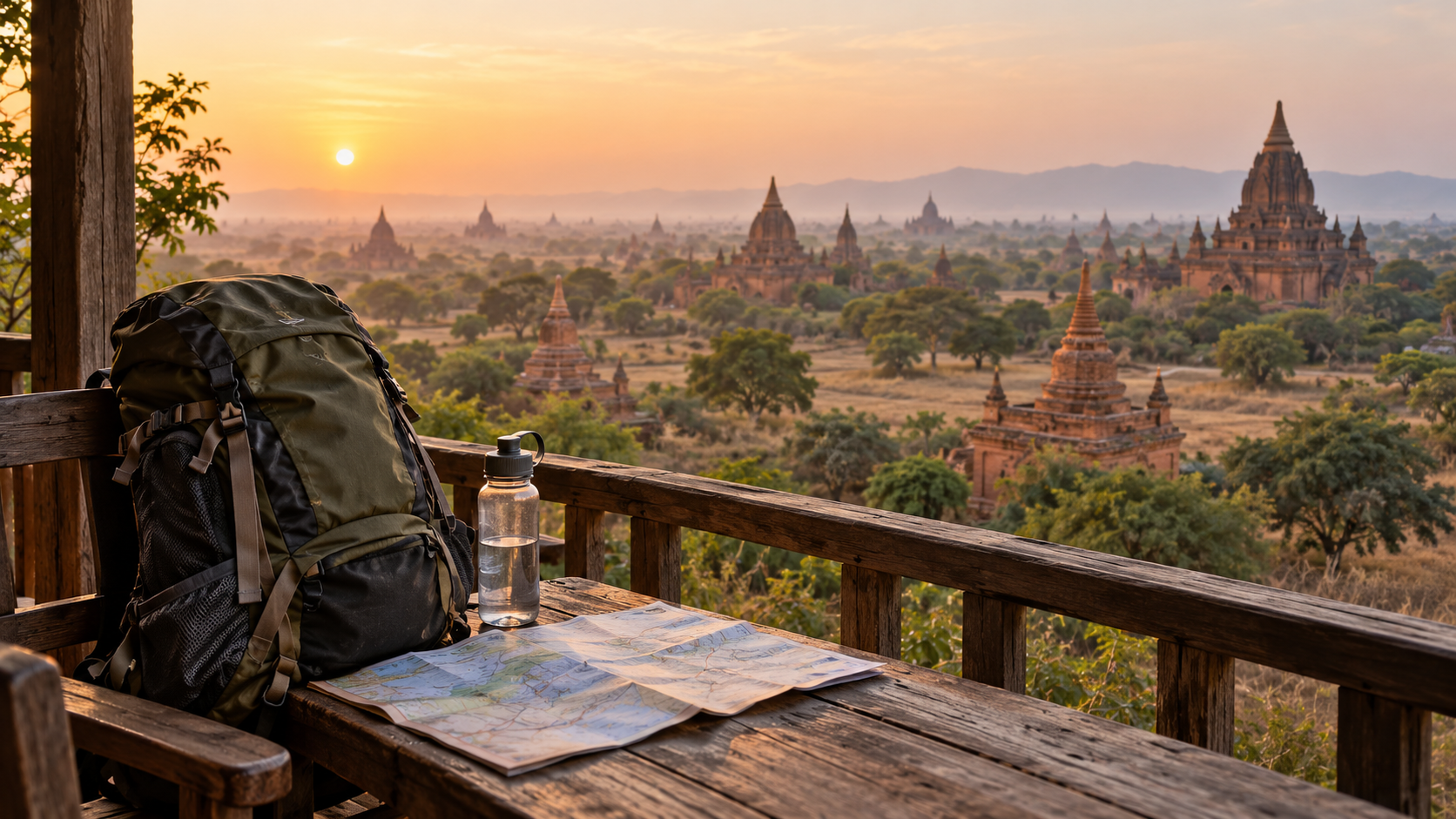
People searching for nldburma cwbiancavoyage backpacking advice appear to be looking for Myanmar travel guidance associated with CWBiancaVoyage-style articles. Published pages using the phrase discuss packing, budgeting, transport, and sightseeing, but the available evidence does not establish it as a single official travel service or verified expert resource. The most useful answer is therefore straightforward: use these articles for general planning ideas, and check Myanmar-specific claims against official guidance before making commitments.
| Topic | Verified information |
|---|---|
| Published subject | An article using the exact phrase presents it as advice for backpacking in Myanmar. |
| U.S. travel advisory | Level 4: Do Not Travel, checked on October 11, 2026. |
| Australian travel advisory | Do not travel to Myanmar. |
| UK travel advisory | Advises against all travel or all but essential travel to specified areas. |
| Official visa resource | Myanmar’s government eVisa portal is evisa.moip.gov.mm. |
Sources: published subject page, U.S. State Department, Australian Smartraveller, and UK government guidance.
What Does Nldburma CWBiancaVoyage Backpacking Advice Mean?
The phrase appears across travel-related pages, with varying interpretations. One article explicitly connects it to Myanmar and covers familiar backpacking subjects: accommodation, local transport, equipment, food, and cultural etiquette. Another uses the same wording within broader advice about saving for travel. These examples support treating it as a phrase used in online travel content, rather than assuming every result describes the same organization or service.
The meaning of “nldburma” within this combined phrase remains unclear. Its appearance alongside Myanmar content does not establish an affiliation with a government, political organization, or tourism authority. Likewise, a recognizable name in an article title does not verify the writer’s qualifications or firsthand experience.
For readers, that distinction matters. A packing suggestion can be assessed against your own needs; a claim that a remote route is safe requires current, location-specific evidence. The latter should carry much more weight in deciding whether to travel.
Myanmar’s Current Advisories Change the Planning Question
As checked on October 11, 2026, the U.S. State Department’s Burma advisory lists the country at Level 4: Do Not Travel. It identifies armed conflict, unrest, arbitrary enforcement of laws, inadequate health infrastructure, landmines, unexploded ordnance, and crime. It also warns that access to highways and airports may be restricted, potentially leaving travelers isolated.
Australia’s Smartraveller guidance also advises against travel, warning that security conditions can deteriorate at short notice, including in Yangon. The UK government’s Myanmar advice uses regional distinctions, advising against all travel or all but essential travel in specified areas. These advisories serve their respective citizens, so readers should also consult their own government’s guidance.
For a discretionary backpacking holiday, these warnings make postponement the prudent starting point. Choosing a lighter bag, booking a better hotel, or traveling with a companion does not resolve conflict-related risks.
Why Familiar Backpacking Routes Need Fresh Verification
A published page using nldburma cwbiancavoyage backpacking advice names Yangon, Bagan, Inle Lake, Mandalay, and remote villages as itinerary options. It also gives reassuring answers about solo travel and visiting rural communities. Those statements should not be treated as proof of present-day safety.
A destination’s appearance in a guide does not establish that the journey there is currently accessible, permitted, or advisable. This is especially important when a proposed itinerary depends on several road transfers or spontaneous changes of direction.
The UK’s safety guidance warns of serious landmine risks in rural areas and notes that mine marking is not widespread. That directly challenges the usual backpacking encouragement to explore unfamiliar trails or seek out remote villages. An offline map cannot establish that a path is safe.
Entry Permission and Travel Safety Are Separate Checks
Myanmar’s official eVisa portal is the appropriate starting point for checking online visa eligibility. Confirm the requirements that apply to your nationality, passport, purpose of travel, and intended entry point. Do not assume that advice written for another passport holder applies to you.
For British citizens traveling on a full British citizen passport, the UK entry requirements page states that a visa must be obtained before travel and that the passport must remain valid for at least six months after arrival. It directs applicants to the government tourist eVisa system.
A visa is permission to seek entry, not a safety endorsement. Before paying for flights or accommodation, separately assess the travel advisory, movement restrictions, insurance terms, and practical ability to leave if conditions change.
Budgeting Must Account for Access to Money
The financial question is broader than finding inexpensive rooms or meals. The UK government describes Myanmar as largely cash-based and reports significant disruption to banking services. It warns that many ATMs do not accept international cards and that withdrawal limits may apply.
If travel is unavoidable, establish how essential bills would be paid during a banking disruption. Confirm payment methods directly with accommodation providers and transport operators, and check applicable currency rules before carrying cash.
Avoid building a budget around an undated daily spending figure from a travel article. Obtain current quotes for the exact services involved, then account separately for delays, changed bookings, and an earlier departure. A cheap itinerary has limited value if its payment or transport assumptions fail.
Health Care and Insurance Deserve More Than a Checklist
Australia’s official guidance says Myanmar’s medical facilities are severely stretched, particularly outside Yangon. Hospitals may close or stop providing services at short notice, and medical evacuation may be delayed or impossible.
Anyone facing unavoidable travel should consult a travel-health professional about their itinerary, medical conditions, prescriptions, and preventive care. A first-aid kit is useful preparation, but it cannot replace access to suitable treatment.
The UK government also warns that traveling against its advice could invalidate insurance. Ask the insurer for written confirmation covering the destination, circumstances, planned activities, and evacuation arrangements. Insurance coverage and the practical availability of evacuation are separate issues.
Communication Plans Must Work During Outages
The UK reports that Myanmar’s mobile networks can be disrupted, foreign SIM cards do not work reliably, and authorities periodically cut internet access entirely. Some communication platforms are also blocked.
For unavoidable travel, keep essential contacts, booking details, and document copies accessible without an internet connection. Agree on check-in times with a trusted contact and specify what they should do after a missed check-in. That gives the arrangement a clear purpose beyond simply sharing your location.
Do not assume that a recommended app or technical workaround will remain usable. Check current restrictions before relying on it, and make sure essential plans do not depend on one messaging platform.
How to Assess a CWBiancaVoyage Travel Article
General packing and budgeting suggestions can still be useful, provided their limits are clear. Evaluate each destination-specific recommendation with four questions:
- When was the underlying information verified? A recent publication date does not prove every detail is current.
- What evidence supports it? Safety reassurance should link to relevant, authoritative information.
- Who does it apply to? Entry rules and consular support depend on nationality and circumstances.
- What would change the recommendation? A useful guide acknowledges restrictions, service disruptions, and reasons to cancel.
This approach helps distinguish a practical suggestion from an unsupported assurance. For Myanmar, the strongest article is one that accurately explains the constraints surrounding travel.
Frequently Asked Questions
Does this phrase identify one verified travel company?
The reviewed pages do not establish a single verified company behind the phrase. It appears in both Myanmar-focused and general backpacking content, so assess the particular website and article you are reading.
Does an available tourist visa mean Myanmar is suitable for a holiday?
No. Visa eligibility concerns entry requirements. Official travel advisories separately address security and other risks; the U.S. and Australia currently advise against travel.
Can traveling with a group make remote trekking advisable?
A group does not remove landmine risks. UK guidance warns that mines in rural areas may be unmarked, so companionship alone is not evidence that a trail is suitable.
What should I verify before making a non-refundable booking?
Check your government’s advisory, nationality-specific entry rules, written insurance coverage, and current transport arrangements. Banking access and communication reliability also deserve attention because official guidance reports disruptions.
Conclusion
Nldburma CWBiancaVoyage backpacking advice is best approached as online travel content whose Myanmar-specific claims need verification. For leisure travelers, current official warnings support postponing a backpacking trip. For anyone with unavoidable travel needs, the priorities are current restrictions, confirmed coverage, dependable payment arrangements, and a realistic exit plan.
Read also Backpacking Advice CWBiancaVoyage: How to Turn Travel Tips Into a Workable Plan
