

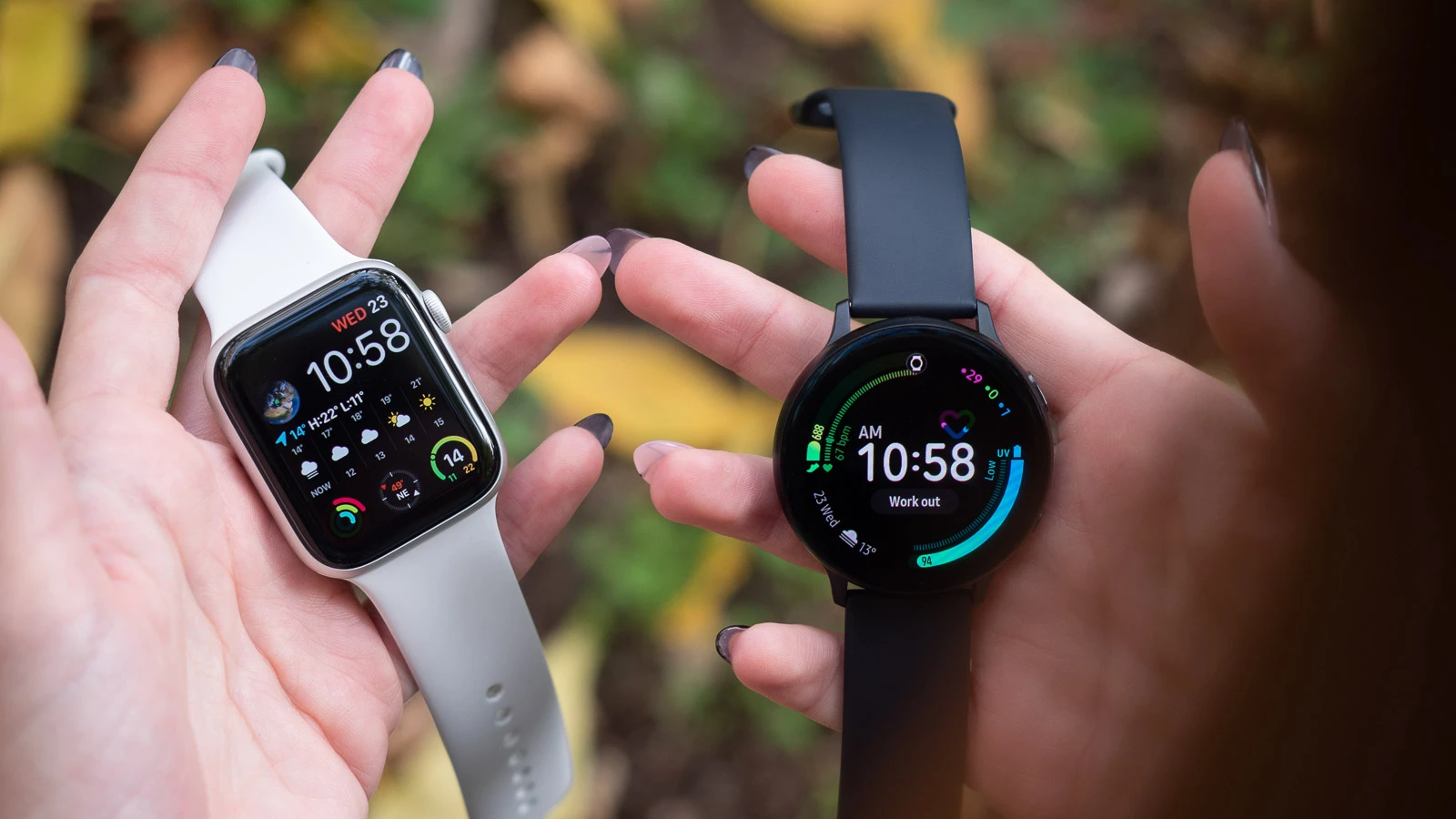
A fitness tracker is the better buy if you mainly want accurate sleep, heart rate and step data with a battery that lasts a week or more, while a smartwatch makes sense if you want GPS, on-wrist maps, contactless payment and notifications alongside your training metrics. The split comes down to battery life against features, and most people underestimate how much that trade matters until they have charged the thing three times in a week. Trackers typically run 5 to 14 days between charges, smartwatches somewhere between 18 hours and 5 days depending on how hard you use the screen and GPS.
The second consideration is what kind of training you actually do. If your week is gym sessions, walks and a bit of cycling, a tracker covers it comfortably. If you run outdoors, hike, swim in open water or train for anything with a distance attached, the built-in GPS and the larger screen on a smartwatch stop being luxuries and start being the reason you bought it.
What does a fitness tracker actually do better?
Battery life is the honest headline. A band with a small monochrome or low-power display will hold a charge for eight to fourteen days, which means you can wear it overnight without thinking about it. Sleep tracking only works if the device is on your wrist at 3am, and a watch sitting on a charger overnight produces no sleep data at all. That one behavioural detail explains why people who care about recovery metrics often end up back on a band.
Comfort matters more than spec sheets suggest. A tracker weighs somewhere between 20 and 30 grams, a mid-range smartwatch closer to 40 to 60 grams with a steel case. Over eight hours of sleep and a day of desk work, that difference is noticeable, particularly for people with smaller wrists who find larger watch bodies catch on sleeves and press awkwardly during pressing movements or front-rack positions.
Price is the third factor. Decent trackers land in the 60 to 180 franc range, and the sensor quality at that tier has improved considerably. You are getting optical heart rate, sleep staging, step counting and often blood oxygen readings for a fraction of what a comparable watch costs. The compromise is connected GPS, meaning the band borrows your phone’s location, so you carry the phone on every outdoor run.
Where do smartwatches earn their price?
Built-in GPS is the clearest dividing line. A smartwatch tracks pace, distance and route without a phone, which changes what an outdoor session looks like. It also enables real-time pace feedback, lap splits and navigation, and for anyone training toward a specific race distance that feedback loop is the point of owning a device at all.
Screen size and interactivity follow from that. A 1.3 to 1.9 inch display shows multiple metrics at once, handles mid-session data fields and makes reviewing a workout on the wrist actually feasible. Training features like structured workouts, interval timers, training load estimates and recovery scores mostly live here, since they need the processing headroom and the display to be useful.
Then there is everything that has nothing to do with fitness. Contactless payment, music storage, call handling, calendar alerts. For plenty of buyers these are the deciding features, and it is worth being honest about that rather than justifying the purchase on training grounds alone. If you are comparing models across brands, a general Swiss marketplace such as pandaloo.ch is often a useful place to see how the mid-range tiers line up on price before committing to a specialist retailer.
Expect to pay 200 to 400 francs for a capable mid-range smartwatch with multiband GPS and proper sport profiles, and 500 upward for models with sapphire glass, longer battery and mapping. The jump from 300 to 600 francs buys refinement rather than fundamentally different data.
How accurate is the data, and does it matter?
Optical wrist heart rate is reliable for steady-state work and less reliable the more your wrist moves. Research comparing wrist sensors to chest straps has generally found close agreement during walking, running and cycling at consistent intensities, with the gap widening during intervals, weight training and anything involving rapid changes in effort. If your training is interval-heavy, a chest strap paired to either device will tell you more than the wrist sensor on its own.
Step counts and distance estimates sit within a few percent for most people, which is fine for trend tracking and useless for precision. Calorie figures are the weakest number on any device, since they rest on population averages for your height, weight and age rather than anything measured about you. Treat them as a relative signal across weeks, not an absolute figure to eat against.
Sleep staging has improved but still guesses more than it measures. Total sleep duration and wake events are reasonably accurate. The breakdown into deep, light and REM is an estimate built from movement and heart rate variability, and different brands will give you different splits on the same night. Use the duration and the consistency, ignore the pie chart.
Which one fits your type of training?
For strength training and general gym work, a tracker is usually enough. You are not tracking distance, rest timers are easy enough on a phone, and the bulk of a watch during barbell work is a genuine annoyance. What you want is resting heart rate trends and sleep quality, and a band delivers both.
For running, cycling and triathlon, a smartwatch is the practical choice. Built-in GPS, sport-specific profiles, the ability to follow a structured session on the wrist. Multiband GPS models handle dense city streets and wooded trails noticeably better than single-band, and if you run in Zurich or Geneva or along tree-covered routes, that difference shows up in your pace data.
Swimmers should check water rating specifically rather than assuming. Look for 5 ATM as a minimum for pool work and 10 ATM for open water, and confirm the device has a dedicated swim mode with stroke detection rather than just surviving immersion. For hikers and skiers, an altimeter and mapping support matter more than heart rate precision, which pushes you firmly into watch territory.
People training mainly for health rather than performance often do better with the cheaper device. The metrics that correlate most with long-term outcomes are daily movement, resting heart rate over time and sleep consistency, and a 90 franc band measures all three about as well as a 500 franc watch does.
Before you decide, look at your charging habits honestly. If you are the kind of person who plugs a phone in every night without fail, a smartwatch will fit your routine fine. If you regularly find your phone at 8 percent by evening, a device that needs charging every second day will end up in a drawer by March.
The other thing worth weighing is ecosystem lock-in. The app, the export options and whether your data can leave the platform matter more over three years than any single feature on the box. Check whether the brand lets you export to a third-party training platform before you buy, because switching later means starting your history from zero.
