

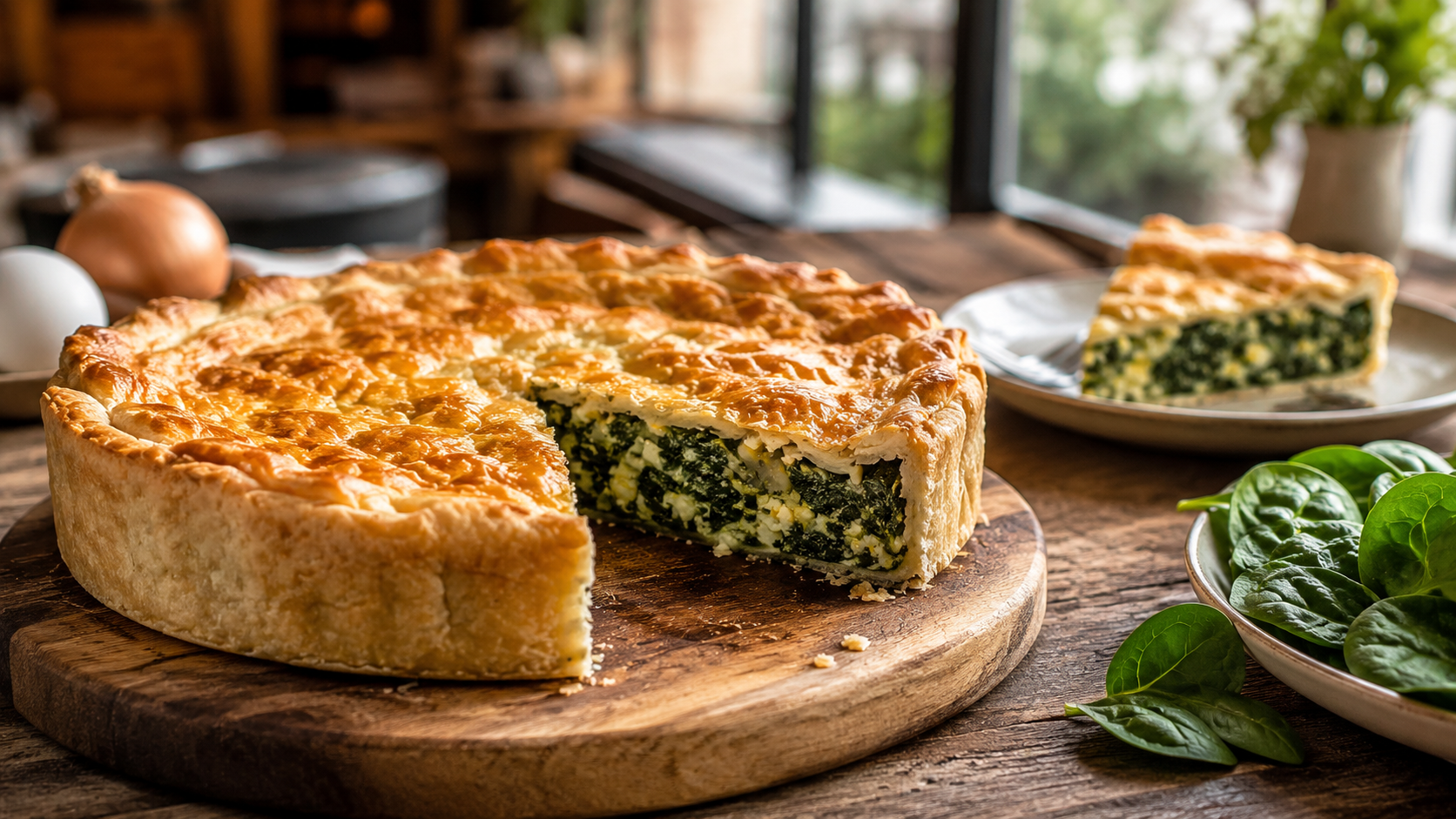
Searching for the best tarta de espinaca near me usually means you want more than an ordinary spinach pie. A good tarta de espinaca combines a well-cooked vegetable filling with pastry that stays crisp enough to hold its shape, plus the right balance of cheese, egg, onion and seasoning. The dish is especially familiar in Argentine cooking, where savoury vegetable tartas are everyday lunch and dinner food, while closely related pascualina has Italian roots. Whether you are looking for a fresh slice, a whole tart for sharing or a vegetarian takeaway, knowing the different styles makes it much easier to choose well.
What Is Tarta de Espinaca?
Tarta de espinaca literally means spinach tart in Spanish. Rather than referring to one strictly defined recipe, the name covers a family of savoury pastry dishes built around spinach.
Argentine recipes commonly combine spinach with ingredients such as onion, eggs and cheese. Depending on the cook, the filling may also contain ricotta, cream, leeks, herbs or other cheeses. Some versions are covered with a second pastry layer, while others are baked as open-faced tarts. Argentine recipe sources show just how flexible the dish can be: combinations range from simple spinach, egg and grated cheese to richer fillings made with ricotta, several cheeses or ham.
That flexibility matters when ordering from a restaurant or bakery. Two places advertising “spinach tart” may be selling noticeably different dishes.
Tarta de Espinaca vs Pascualina
You may also see pascualina, torta pasqualina or tarta pascualina while searching for tarta de espinaca.
Torta pasqualina comes from Liguria in Italy and is traditionally associated with Easter. Italy’s official tourism website describes it as a savoury pastry filled with spinach, ricotta, cheese and whole eggs, although regional variations use other greens such as chard. The tradition later became firmly established in Argentina and Uruguay.
In Argentina, pascualina is no longer restricted to Easter. It has become familiar year-round home cooking, with families using spinach or chard and adapting the cheese, egg and vegetable filling to their preferences.
Common names you may encounter
| Menu name | What you can generally expect |
|---|---|
| Tarta de espinaca | Savoury spinach tart with pastry and a spinach-based filling |
| Pascualina | Vegetable pie often containing spinach or chard, cheese and eggs |
| Spinach and ricotta tart | A cheese-forward variation commonly made with ricotta |
| Spinach pie | Broad English description; ingredients and pastry style can vary |
| Spinach quiche | Usually more custard-like and should not automatically be treated as the same dish |
If you specifically want the South American style, searching both tarta de espinaca and pascualina can produce better local results than searching only for “spinach pie.”
How to Find the Best Tarta de Espinaca Near You
A local search result tells you what is nearby, but it does not necessarily tell you which tart is worth ordering. Look beyond distance and star ratings.
Start with Argentine and South American food businesses
Argentine bakeries, cafés, delis and restaurants are the most logical places to check first. Some empanada specialists also sell full-size tartas because both foods fit naturally into the takeaway and bakery-style side of Argentine cooking.
If the Spanish keyword produces few results in your area, try combinations such as:
- Argentine spinach tart
- pascualina near me
- spinach ricotta pie
- Argentine bakery near me
- South American deli near me
- vegetarian Argentine food
For UK searches in particular, English menu descriptions may appear even when the recipe itself follows an Argentine or Italian-South American tradition.
Read the actual menu description
Do not assume every spinach tart contains the same ingredients.
A traditional-looking version might contain spinach, onion, egg and cheese. Another may use ricotta. Others add cream, mozzarella, hard-boiled egg or several different cheeses. Meat is also possible: Argentine recipes exist that combine spinach tart with ham and cheese.
If you are vegetarian, check the ingredients instead of relying solely on the word “spinach.”
What Makes a Good Tarta de Espinaca?
The best examples are balanced rather than simply packed with filling.
Pastry that holds its structure
The base should be properly baked and sturdy enough to support the spinach. Excess moisture is one of the biggest practical challenges in vegetable tarts, which is why many recipes cook and drain the spinach before assembling the filling.
A soggy bottom can mean the filling released too much water or the pastry did not bake sufficiently.
A spinach filling that still tastes like spinach
Cheese adds richness, but it should not completely overwhelm the vegetables. Onion, pepper, nutmeg and similar seasonings are frequently used to add depth.
Depending on the style, the texture can range from relatively firm and vegetable-heavy to soft and creamy.
Good filling-to-pastry balance
Too much pastry makes the tart dry and heavy. Too much wet filling makes takeaway slices difficult to handle.
For a slice you plan to eat on the move, a reasonably firm filling and crisp pastry are especially useful.
Freshness
Ask whether the tart was baked that day, particularly at bakeries selling individual slices. A well-made tarta can still be enjoyable reheated, but fresh pastry generally provides a better contrast with the soft vegetable filling.
Which Version Should You Order?
Your ideal tarta depends on what you want from the meal.
For a lighter vegetable-forward lunch, look for spinach, onion and a modest amount of cheese. If you prefer something richer, spinach and ricotta or spinach with multiple cheeses is a better choice.
Pascualina is worth looking for if you enjoy substantial filled pies. Some traditional versions incorporate whole eggs inside the vegetable filling, creating distinctive slices when the tart is cut. The Italian tradition includes spinach or other greens with cheese and egg, although recipes vary considerably between households and regions.
Is Tarta de Espinaca Vegetarian?
Many versions are vegetarian because the basic filling centres on spinach, eggs and dairy products. However, not every tarta de espinaca is meat-free. Ham is used in some recipes, so anyone following a vegetarian diet should confirm the ingredients before ordering.
People with allergies should also ask about the pastry and filling. Wheat, milk and eggs are common components of traditional versions.
Vegan tarta de espinaca requires more significant changes because conventional recipes frequently rely on eggs and cheese to bind and flavour the filling.
Buying a Slice vs a Whole Tarta
A single slice is ideal if you are trying a bakery or restaurant for the first time. It lets you judge the pastry, seasoning and filling without committing to a whole tart.
A full tarta makes more sense for:
- family lunches
- picnics
- office food
- vegetarian buffet dishes
- make-ahead meals
- sharing at gatherings
Before ordering a whole tart, check its diameter or number of portions rather than relying on photographs. Bakery sizes differ considerably.
Also ask whether it is supplied hot, chilled or at room temperature and follow the seller’s storage and reheating directions.
Is Tarta de Espinaca the Same as Spinach Quiche?
Not exactly.
Both can combine pastry, spinach, eggs and dairy, but quiche is typically defined by an egg-and-dairy custard baked in a pastry shell. Tarta de espinaca is a broader preparation and may have a much more vegetable-dense filling. It can also be fully covered with pastry.
If a restaurant describes its dish only as “spinach quiche,” expect a different texture from a traditional Argentine-style vegetable tarta.
FAQs
Where can I find the best tarta de espinaca near me?
Start with nearby Argentine restaurants, bakeries, empanada shops and South American delis. Search for both “tarta de espinaca” and “pascualina,” because businesses may use either term for similar spinach-based savoury pies.
What is usually inside tarta de espinaca?
Common ingredients include spinach, onion, eggs and cheese inside pastry. Ricotta, cream, leeks, mozzarella, grated hard cheese and seasonings are also used. Recipes vary considerably between cooks and regions.
What is the difference between tarta de espinaca and pascualina?
Tarta de espinaca is a general term for spinach tart. Pascualina refers to a specific savoury-pie tradition originating in Liguria, Italy, which became popular in Argentina and Uruguay. It commonly combines leafy greens with cheese and eggs.
Can I eat tarta de espinaca cold?
Many savoury vegetable tartas can be served either warm or cool. Pascualina in particular has traditionally also been eaten cold, including as picnic food. Follow the bakery or restaurant’s storage guidance for anything you take home.
Is tarta de espinaca healthy?
Its nutritional profile depends heavily on the recipe. Spinach may be the main filling, but pastry, cheese, cream and eggs can substantially change the energy and fat content. Treat the ingredient list and portion size as more useful indicators than the name of the dish alone.
What should I search if no restaurant lists tarta de espinaca?
Try “pascualina near me,” “Argentine spinach tart,” “spinach and ricotta pie,” “Argentine bakery” or “South American bakery.” Restaurants serving Argentine food may translate menu items into English.
Conclusion
Finding the best tarta de espinaca near me becomes easier once you know what to look for. Search beyond the exact Spanish phrase, check Argentine bakeries and South American food shops, and compare the filling before ordering. A good tarta should have properly baked pastry, well-drained spinach and enough egg or cheese to bring the filling together without overpowering the vegetables. If you see pascualina on the menu, consider it too: its Italian roots and long history in Argentine cooking make it one of the closest relatives of the spinach tart you are looking for.
Read also Pushwiki Com: What the Website Is and What Readers Should Know
